
A steady, patient space to move from a state of survival into a life of felt safety, presence, and peace.
If you’ve spent your life waiting for the other shoe to drop, we want you to know: your exhaustion is valid.
When you live through long-term or repeated stress, your nervous system doesn’t simply ‘forget’ — it adapts. It rewires itself to stay on high alert, scanning for a crisis even when you are technically safe. This isn’t a flaw in your design; it’s a testament to your body’s profound ability to protect itself.
At So You Need Therapy, our trauma-informed approach offers a safe space — in Toronto or virtually — to help your nervous system finally lower its guard and begin to quiet the echoes of the past.


While standard PTSD often stems from a single event, Complex PTSD (C-PTSD) is the result of ongoing experiences where you felt trapped or unsafe over a long period. In these situations, your nervous system learned that remaining on high alert was the most effective way to navigate your world. Over time, this ‘survival mode’ becomes a default setting. Even years later, your body may still react to daily life as if a threat is imminent. Our work together is about helping your nervous system realize that those circumstances have changed and that it is finally safe to occupy the present moment.
These experiences are the physical and emotional markers of a system that has carried a heavy burden. They are signals that your body is still working hard to ensure your safety:
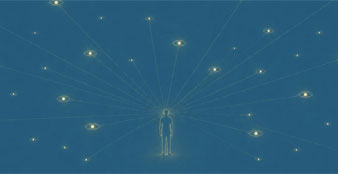
Constantly scanning your surroundings, monitoring the moods of others, or positioning yourself near exits to ensure you aren’t blindsided by a change in the environment.

A sudden wave of intense feeling — such as fear or hopelessness — that makes it feel as though a past experience is happening in the present, even without a clear external cause.

Feeling ‘spaced out’ or disconnected from your body; a sophisticated protective mechanism designed to shield you from internal pain that feels too great to process.

A persistent, heavy belief that there is something inherently wrong with you — often the mind internalizing past treatment as a reflection of self-worth.
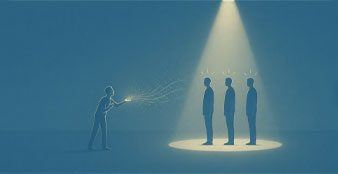
Instinctively trying to please or appease others to avoid conflict; a survival strategy used to maintain a sense of safety.
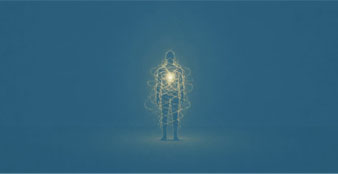
Experiencing unexplained physical tension, a racing heart, or digestive distress when there is no immediate threat. This is your nervous system signaling that it is still living in a state of ‘high alert’, prioritizing survival over your body’s ability to rest and digest.
Trauma often lives alongside other sensitivities. We help you distinguish between a survival response and other processing styles to offer precise support.
A sudden ‘shutdown,’ feeling numb, or ‘on edge’ due to a memory of feeling unsafe.
A sudden spiral or intense panic because of a relationship shift or fear of rejection.
A sudden burst of frustration, restlessness, or ‘zoning out’ because a task is under-stimulating.
To find physical and internal safety so the body can stop its survival response.
To find connection and reassurance so you can avoid the pain of being alone.
To find engagement and dopamine so the brain can stay focused and ‘online.’
Often feels heavy or weighed down by past events, leading to deep internal criticism.
Feels like it changes or shifts depending on who you are with to maintain connection.
Generally stable, though administrative or repetitive tasks may feel like ‘failure.’
Choices made to run away, hide, or appease others to ensure immediate safety.
Choices made to stop an overwhelming emotion or to keep someone from leaving.
Choices made because the brain is seeking stimulation, novelty, or a spark of interest.
| LOOKING AT… | C-PTSD | BPD | ADHD |
|---|---|---|---|
| The Moment | A sudden ‘shutdown,’ feeling numb, or ‘on edge’ due to a memory of feeling unsafe. | A sudden spiral or intense panic because of a relationship shift or fear of rejection. | A sudden burst of frustration, restlessness, or ‘zoning out’ because a task is under-stimulating. |
| Primary Goal | To find physical and internal safety so the body can stop its survival response. | To find connection and reassurance so you can avoid the pain of being alone. | To find engagement and dopamine so the brain can stay focused and ‘online.’ |
| Sense of Self | Often feels heavy or weighed down by past events, leading to deep internal criticism. | Feels like it changes or shifts depending on who you are with to maintain connection. | Generally stable, though administrative or repetitive tasks may feel like ‘failure.’ |
| Impulse | Choices made to run away, hide, or appease others to ensure immediate safety. | Choices made to stop an overwhelming emotion or to keep someone from leaving. | Choices made because the brain is seeking stimulation, novelty, or a spark of interest. |
We move at a pace that respects your boundaries, understanding that for a protective nervous system, moving too quickly can feel like a threat.

Before we address the past, we help you find safety in the present using Sensorimotor Psychotherapy and Somatic Experiencing — body-based approaches that help your nervous system settle, reduce flashbacks, and rebuild a felt sense of ‘I’m here, I’m okay.’

Using Internal Family Systems (IFS), we help you understand the protective parts of you that learned to keep you safe — the inner critic, the hypervigilant scanner, the part that disappears when things get hard. None of these parts are flaws. They’re survivors, and IFS gives them somewhere to set their burden down.
When your nervous system is steady enough, we use Trauma-Focused CBT and Narrative Therapy to help you make sense of what happened — to categorize memories as past events rather than ongoing threats, and to reauthor the story you tell about yourself.

Our Nurse Practitioners understand the physical toll of chronic stress and can help address insomnia and physical tension, providing a calmer foundation for therapy.
Yes. While you cannot change what occurred, you can change how your brain and body respond. Through therapy, the ‘alarms’ in your nervous system become quieter.
Because trauma lives in the ‘survival’ part of the brain, which reacts faster than the ‘logical’ part. You must train your body to feel safe again.
This is common. Trauma often stays in the body as ‘sensations’ rather than clear stories. We can work with how your body feels in the present without a perfect record of the past.
Tell us what you're looking for. We'll instantly email you everything you need to know about that service — pricing, what to expect, and how to book.